


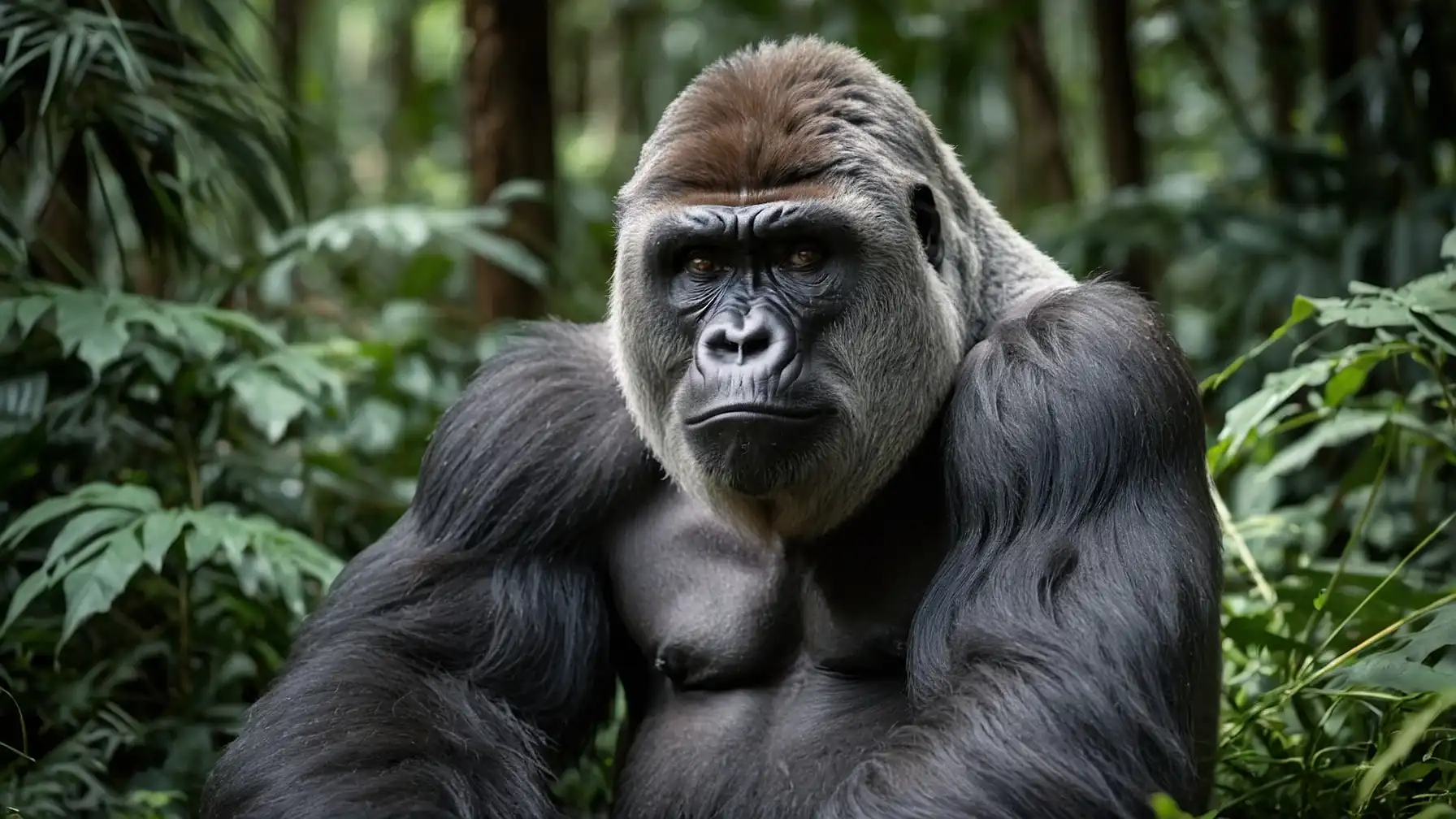
A silverback gorilla typically weighs between 300 and 485 pounds (136 to 220 kg), with most adult males averaging around 430 pounds. These massive primates are the largest living primates on Earth.
Female gorillas weigh considerably less, ranging from 150 to 250 pounds. The exact weight depends on the gorilla’s subspecies, age, diet, and whether it lives in the wild or captivity.
Curious about what else weighs 300 pounds? A silverback gorilla shares its weight class with some surprising everyday objects and animals. From vending machines to refrigerators, pig breeds to NFL linemen, there are plenty of fascinating comparisons that put a gorilla’s mass into perspective. Check out a complete guide to things weighing 300 pounds to explore more weight comparisons and discover just how heavy 300 pounds really is in practical, real-world terms.
Average Weight of a Silverback Gorilla
When people think of gorillas, they often picture the impressive silverback, the dominant male that leads and protects his family group. These magnificent animals earn their name from the silver-gray hair that develops across their backs when they reach full maturity around 12 to 14 years old.
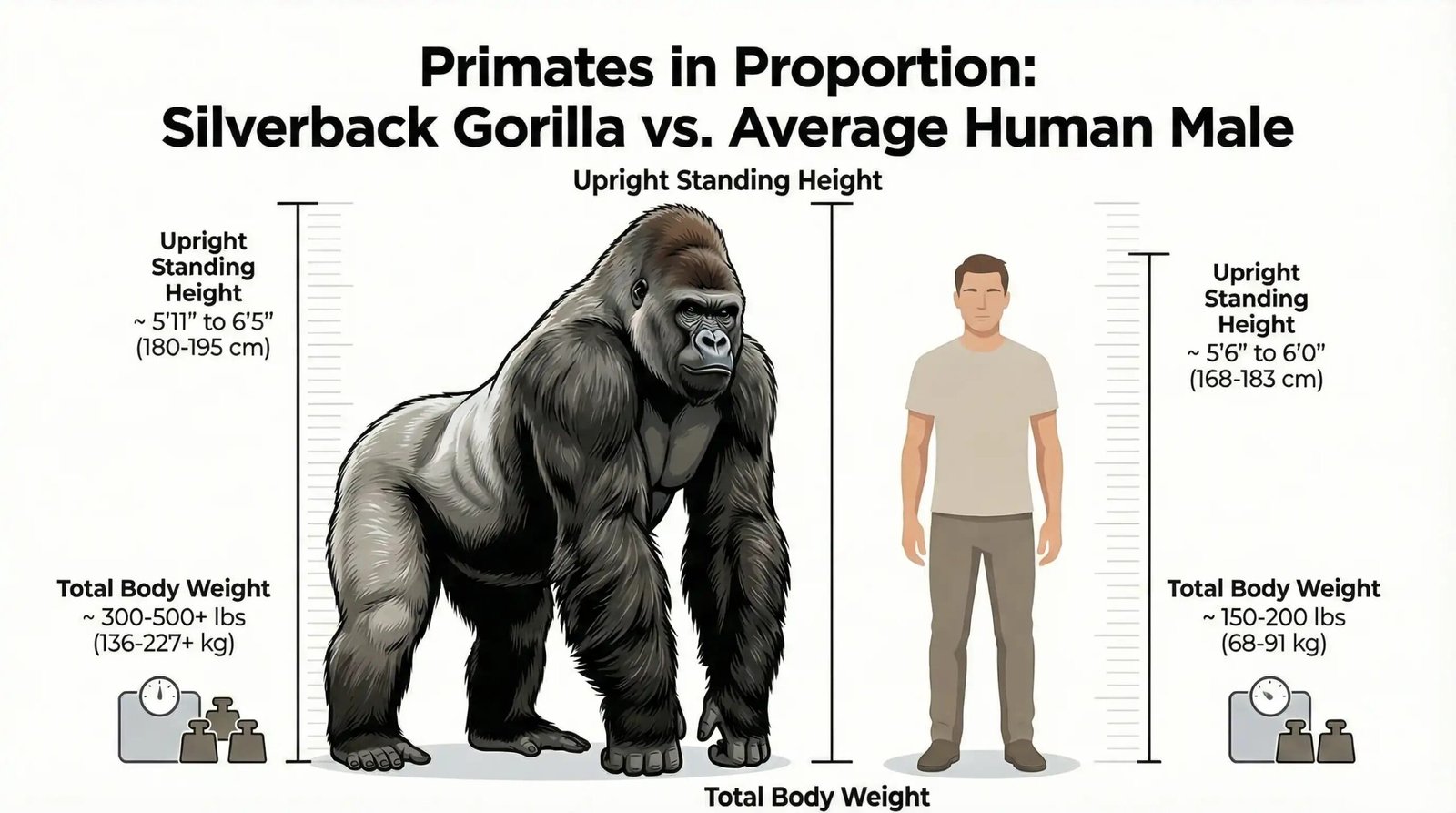
The typical silverback weighs anywhere from 300 to 485 pounds. To put that in perspective, that’s roughly the same weight as two to three average American men. The average silverback comes in at about 430 pounds, though this can vary quite a bit depending on several factors.
What’s really striking is the size difference between males and females. Adult female gorillas weigh between 150 and 250 pounds, making them about half the size of their male counterparts. This dramatic difference, called sexual dimorphism, reflects the silverback’s role as the family protector and leader.
Weight Differences Between Gorilla Subspecies
Not all silverbacks weigh the same. There are four subspecies of gorillas, and each has distinct weight characteristics based on their habitat and genetics.
| Gorilla Subspecies | Average Male Weight | Habitat |
| Mountain Gorilla | Up to 485 lbs (220 kg) | High-altitude forests in Rwanda, Uganda, DRC |
| Eastern Lowland Gorilla | 463-485 lbs (210-220 kg) | Lowland forests in eastern DRC |
| Western Lowland Gorilla | 374 lbs (169.5 kg) | Forests in central Africa |
| Cross River Gorilla | ~374 lbs (169.5 kg) | Nigeria-Cameroon border region |
Mountain gorillas and eastern lowland gorillas are the heavyweights of the gorilla world. They live in cooler, high-altitude environments where their larger bodies help them stay warm. Western lowland gorillas, while still impressive, tend to be lighter and have a slightly smaller build.
Heaviest Gorillas Ever Recorded
While the typical silverback is already enormous, some individuals have grown to truly exceptional sizes. The heaviest wild gorilla ever documented weighed an incredible 589 pounds (267 kg). This massive male was shot in Cameroon in the 1990s, giving researchers rare data on maximum wild gorilla size.
The tallest gorilla on record stood 6 feet 5 inches tall and weighed 483 pounds. Most silverbacks stand between 5 and 6 feet tall when upright, but their hunched posture and knuckle-walking locomotion make them appear shorter.
Captive gorillas often grow even larger than their wild relatives. With unlimited access to food and less need for physical activity, captive silverbacks have been documented weighing up to 683 pounds. While this shows the potential size these animals can reach, it also highlights how captivity can lead to obesity, just like in humans.
What Factors Affect a Silverback’s Weight?
Several key factors determine how much a silverback gorilla will weigh throughout its lifetime.
Diet and Food Availability
Despite their intimidating size and strength, gorillas are entirely herbivorous just like other animals like cows. A silverback consumes between 34 and 60 pounds of vegetation daily. Their diet includes leaves, stems, bamboo shoots, fruit, and bark. Think about it: they build all that muscle mass without eating any meat whatsoever.
In areas where food is abundant, gorillas naturally weigh more. In leaner habitats or during dry seasons, they may lose weight.
Habitat and Altitude
Mountain gorillas living at elevations between 7,200 and 14,100 feet tend to be heavier than lowland species. The cooler temperatures at high altitudes favor larger body sizes, which help retain heat.
Age and Maturity
Young male gorillas, called blackbacks, weigh significantly less than mature silverbacks. Males continue growing until they reach full maturity around age 14, when they develop their characteristic silver saddle.
Captivity vs. Wild
Captive gorillas often exceed wild weight ranges due to less physical activity, stress-free environments, and consistent food availability. While this might seem healthy, excess weight can lead to health problems similar to those seen in overweight humans.
Gorilla Weight Compared to Humans and Other Animals
To truly appreciate a silverback’s size, it helps to make some comparisons.
The average American man weighs about 200 pounds. A typical silverback at 430 pounds weighs more than twice that amount. If you lined up three average women (around 170 pounds each), their combined weight would roughly equal one silverback.
Here are some interesting weight comparisons:
- A silverback gorilla (430 lbs) weighs about the same as an adult male lion (420 lbs)
- A baby gorilla at birth (3 to 4.5 lbs) weighs similar to a human newborn
- The heaviest gorilla ever recorded (589 lbs) weighed less than an average grizzly bear (600 lbs)
- A silverback weighs roughly the same as four full kegs of beer (each keg weighs about 160 lbs full)
What’s even more impressive than their weight is their strength. Gorillas are estimated to be 4 to 10 times stronger than humans pound for pound. A silverback can lift over 1,763 pounds of dead weight, and some researchers estimate they could bench press up to 4,000 pounds if trained to do so.
How Much Do Female Gorillas Weigh?
Female gorillas are considerably smaller than males, weighing between 150 and 250 pounds. This puts them in the same weight range as many adult human women in the United States.
Females reach sexual maturity around age 10, several years before males. Their smaller size reflects different survival strategies. While silverbacks need size and strength to protect the family from threats, females focus on efficiently foraging for food and caring for infants.
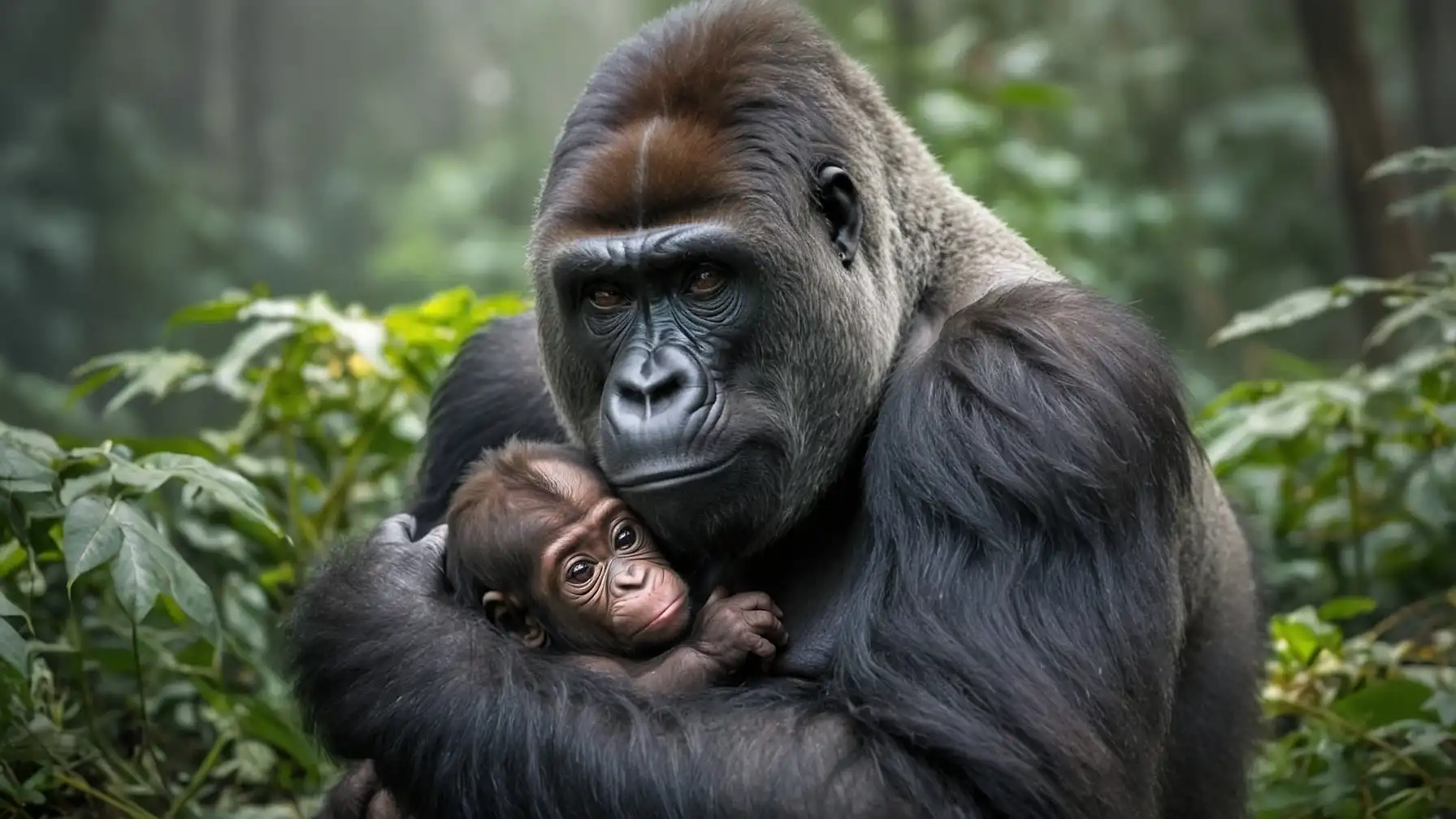
Baby gorillas are born weighing just 3 to 4.5 pounds, about the same as human babies. They grow rapidly during their first few years, clinging to their mothers and gradually learning to forage independently.
Frequently Asked Questions
How much does a baby gorilla weigh?
Baby gorillas weigh between 3 and 4.5 pounds (1.4 to 2 kg) at birth, which is comparable to human newborns. They grow quickly and can weigh 30 to 40 pounds by their first birthday.
Are silverback gorillas stronger than they are heavy?
Absolutely. Despite weighing 300 to 485 pounds, silverbacks possess incredible strength. They can lift over 1,763 pounds and are estimated to be 4 to 10 times stronger than humans relative to their body weight.
Why do male gorillas weigh so much more than females?
This size difference, called sexual dimorphism, exists because male gorillas must defend their families from threats. Their larger size and strength help them compete with other males and protect their group from predators.
Do gorillas gain weight in captivity?
Yes, captive gorillas often weigh significantly more than wild gorillas, sometimes exceeding 683 pounds. Reduced activity levels and consistent food availability contribute to this weight gain, similar to obesity issues in captive animals and humans.
How does a gorilla build so much muscle eating only plants?
Gorillas have highly efficient digestive systems that extract maximum nutrients from plant matter. They consume 34 to 60 pounds of vegetation daily, providing ample calories and protein to build and maintain their massive muscle mass naturally.
Conclusion
Silverback gorillas are truly remarkable animals, with most adult males weighing between 300 and 485 pounds. Their impressive size, combined with gentle nature and intelligence, makes them one of the most fascinating creatures on Earth.
Whether in the misty mountains of Rwanda or lowland forests of central Africa, these magnificent primates remind us of the incredible diversity and power found in the natural world. Understanding their weight and size helps us appreciate the urgent need to protect these critically endangered animals and their vanishing habitats.
