


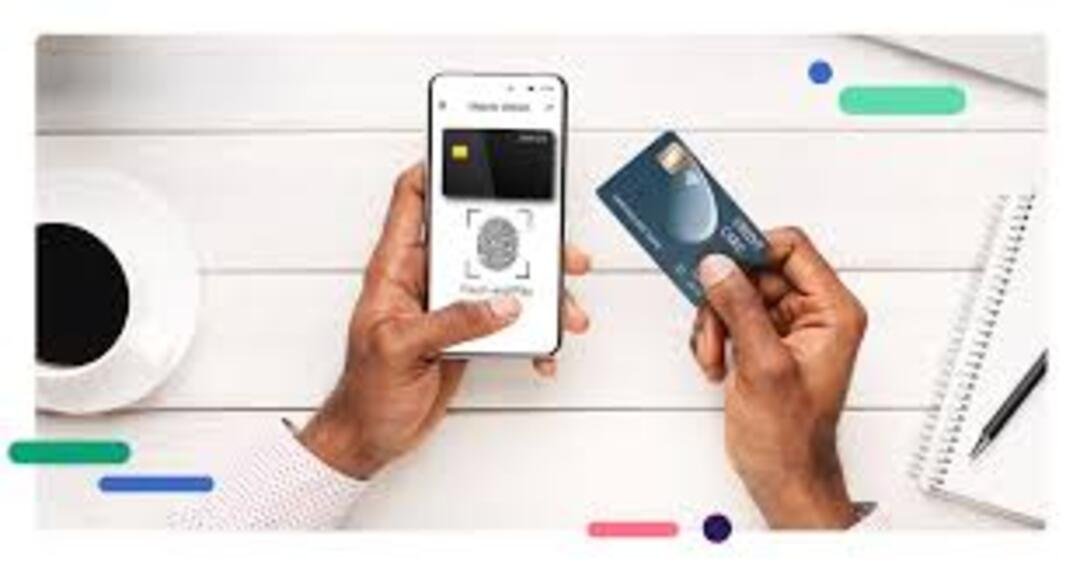
Thanks to the widespread use of the internet, digital payment methods have become one of the most preferred platforms for transactions worldwide. Payments are now faster, more accessible, and no longer limited by time or location. There’s no need to stand in long queues or rely on physical cash.
As with any innovation, the transition to digital payments hasn’t been without challenges. And when it comes to transactions, you can’t compromise on security, making digital payment security the most concerning challenge. To tackle this challenge, payment authentication has become a popular technique for both merchants and customers.
Yet, in some cases, authentication methods designed to solve security issues can become challenges themselves, impacting user experience and transaction success. In this blog, we will explore the key challenges associated with digital payment authentication and discuss effective ways to address them.
What is Payment Authentication
Before getting started on payment authentication challenges, you need to understand what payment authentication is. The process of verifying the identity and legitimacy of a payment transaction is what we call a payment authentication.
In technical terms, a payment authentication implements robust protocols like 3DS or 3DS 2.0 to protect both merchants and customers from payment fraud, chargebacks, and other unauthorised activities.
Available Payment Authentications
Here are some commonly used payment authentication methods incorporating various factors, such as PIN and CVV, to ensure that payments are safe and secure.
Strong Customer Authentication (SCA)
Enabled by the globally accepted 3DS protocol, SCA is a payment security requirement mandated by the European Union’s Revised Payment Services Directive (PSD2). This authentication mainly uses different authentication factors to offer extra layers of verification.
Address Verification System (AVS)
AVS allows the merchant to check if the customer-provided billing address is a match to the address the card issuer has on file. If it is a match, the bank sends an AVS response code to the merchant.
Card Verification Value (CVV)
While making an online transaction, cardholders are asked to enter the CVV along with other card details. The three or four-digit CVV code allows the payment gateway to identify the physical card possession at the time of transaction.
Payment Authentication Challenges
Even though payment authentication is mandatory for secure transactions in many regulated markets, merchants have faced many challenges that are listed below.
High Cart Abandonment Due to Friction
For payment authentication, customers are required to enter one-time passwords (OTPs) or complete multi-step 3DS authentication. But, in some cases, the time taken to issue these codes can be significantly slow, which in turn delays the checkout process.
To resolve the cart abandonment issue:
- Instead of authentication for every single purchase, you can trigger active challenges for high-risk transactions, like unusual locations or high credit payments.
- You can incorporate the use of time-efficient native, app-based biometrics like FaceID and fingerprint, over time-consuming manual SMS OTP entry.
Low Approval Rates and False Declines
Sometimes, banks can be oversensitive to fraud detection. Oversensitivity, combined with improper 3DS implementations, practically means setting yourself up to flag and decline a legitimate transaction wrongly.
To resolve the false decline issue:
- Ensure your payment gateway uses more than one authentication factor over a single data point. More data provides better risk assessment and higher approval rates.
- You need to use data-only 3DS for low-risk transactions, which provides issuers with the needed data without creating a customer-facing challenge.
Evolving Regulatory Compliance
Regional regulations, like PSD2 in Europe and RBI mandates in India, are always evolving. Thus, failing to comply with these constantly changing regulations can lead to fines, transaction declines, or the inability to process payments in certain regions.
To resolve the regulatory compliance issue:
- You can use the Payment Orchestration Layer, which can help manage regulatory standards.
- You can allow SCA exemptions, like low-value transactions and trusted beneficiaries, to be automatically processed to avoid unnecessary 3DS.
Fragmented Payment Methods
With different payment methods, it will be hard to manage different authentication requirements. Such payment authentications for cards, digital wallets, and local payment methods create a disjointed experience.
To resolve the fragmented payment methods issue:
- You can use a Unified Payment Gateway that has a single payment orchestration platform to manage all payment types, providing a consistent UI across devices.
- You can also implement digital identity wallets that merge authentication and payment authorisation into a single, seamless step.
Limited Visibility into Authentication Outcomes
Many merchant dashboards focus only on authorisation, not authentication. Thereby, making it difficult to pinpoint if a failure is due to a bank issue or a broken 3DS flow. Additionally, with minimal flexibility, authentication won’t allow the merchants to manage exemptions.
To resolve the limited visibility issue:
- You can use advanced and specialised analytics dashboards that offer non-sensitive data across various data points.
- You need to focus on the issuer, network, and user segment, which enable you to identify where users are dropping off.
Final Thoughts
More often than not, traditional financial systems struggle to adapt to new digital services and vice versa. However, the convenience and efficiency make the struggles worthwhile. But efficiency doesn’t offer security. As a result, there is a need for payment authentication that provides protection against fraud and credit risk by enabling safe and secure transactions.
But keep in mind that this payment authentication comes with its own set of challenges. Just because it possesses challenges doesn’t mean you can ignore an essential step towards transaction security. That’s why you need to understand these challenges and how to solve them to offer frictionless, safe, and risk-free payment solutions.
