


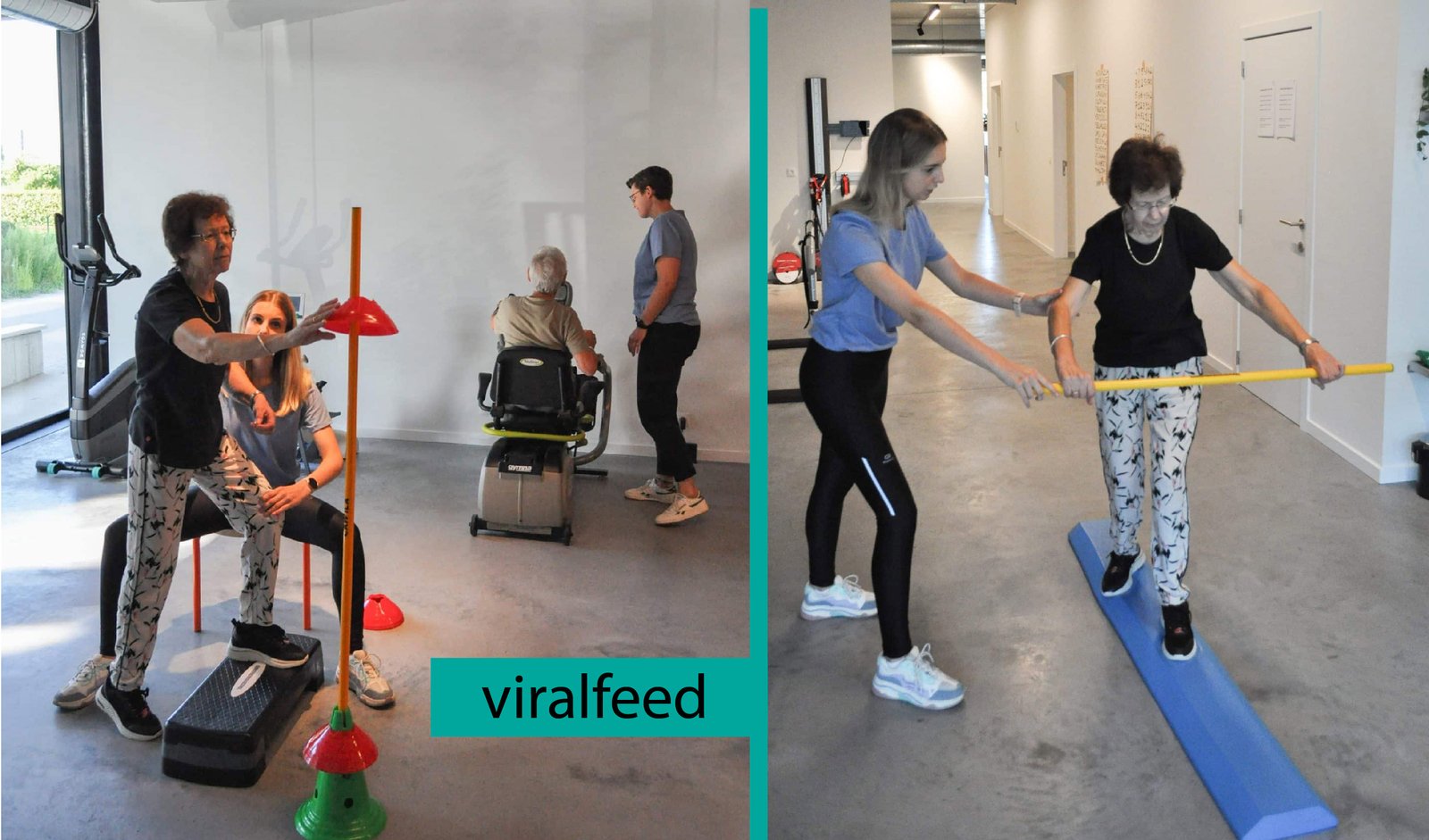
Every year, millions of people wake up unable to move the way they once did. A stroke steals the use of an arm. A spinal injury silences the legs. A neurological condition slowly erodes the coordination that once felt effortless. For these patients, the question is never just medical — it is deeply personal. Will I walk again? Will I hold my child’s hand? Will I be independent?
Kinervus is a modern physiotherapy and neurological rehabilitation system built to answer that question with action.
At its core, Kinervus treats movement as a neurological process — not just a muscular one. It targets the communication pathways between the brain, spinal cord, and muscles, restoring the signals that injury or disease has disrupted. Where conventional therapy often focuses on strengthening muscles alone, Kinervus goes deeper — retraining the nervous system itself so that recovery is not temporary relief, but lasting restoration.
Developed by rehabilitation specialists in Belgium and grounded in the latest neuroscience, the Kinervus approach has helped patients with stroke, Parkinson’s disease, spinal cord injury, traumatic brain injury, and more regain movement, independence, and confidence in their daily lives.
This guide explains exactly how Kinervus works, who it helps, what treatment looks like in practice, and why its evidence-based, patient-centered model is one of the most comprehensive approaches in modern rehabilitation today.
Origin and Development of the Kinervus Concept
Kinervus has its roots in European rehabilitation research, with a particular foundation in Alken, Belgium. The approach emerged from clinical work by rehabilitation professionals who sought more precise, effective methods for patients with complex neurological and physical conditions.

A key contributor to this framework is Stefanie Ver Eecken, a rehabilitation specialist whose work shaped the patient-focused philosophy central to the Kinervus model. Her contribution centered on building rehabilitation frameworks that go beyond generic protocols — prioritizing each patient’s unique neurological profile, personal functional goals, and individual rate of recovery.
Clinics applying the Kinervus framework use diagnostic tools to assess baseline function, track measurable progress, and continuously refine treatment based on real patient data. This commitment to evidence-driven, individualized decision-making is what sets the approach apart from traditional one-size-fits-all rehabilitation.
The Treatment Approach
Restoring the Brain-Body Connection
At the core of Kinervus is the principle that movement is a neurological skill — and like any skill, it can be retrained. When the nervous system sustains damage, communication between the brain and muscles becomes inefficient, fragmented, or misdirected. Treatment corrects these inefficiencies through targeted clinical intervention.
Therapists begin with a comprehensive functional assessment that maps precisely where nerve signal quality has deteriorated. Findings directly inform the design of a rehabilitation program tailored to the patient’s specific neurological deficits. Therapy targets the nervous system directly so patients rebuild movement control rather than simply strengthening muscles in isolation.
Movement Analysis and Progressive Training
A defining feature of the Kinervus method is detailed movement analysis before any exercise program begins. Rather than prescribing generic strengthening routines, clinicians identify the precise movement patterns requiring correction and design sessions around restoring those specific patterns.
Training progresses through carefully staged phases:
- Phase 1: Low-complexity, high-repetition movements to establish new nerve pathways
- Phase 2: Functional tasks that replicate daily activities such as walking, climbing stairs, or reaching
- Phase 3: Advanced movement challenges to consolidate control and expand functional capacity
This graduated approach ensures the nervous system is appropriately challenged at every stage without risking regression or overload.
How the Nervous System Influences Movement
Human movement depends on a layered communication network: the brain generates commands, the spinal cord coordinates and relays them, and peripheral nerves activate the muscles that execute motion. Disruption at any level — due to stroke, trauma, or degenerative disease — reduces the quality and reliability of movement.
What makes neurological rehabilitation distinct from conventional physiotherapy is its focus on the signaling system itself, not just the muscles it controls. Repeated, task-specific training drives neuroplasticity — the brain’s capacity to reorganize its neural architecture in response to practice and experience.
Over time, the nervous system forms new or alternative pathways that compensate for damaged ones, restoring voluntary control. Consistency and repetition are non-negotiable: each correctly performed movement reinforces the neural circuits responsible for that pattern, making it progressively more automatic and reliable.
Conditions Treated in Neurological Rehabilitation Programs
Kinervus rehabilitation is designed for patients whose movement limitations originate in the nervous system. The approach applies across a broad range of diagnoses:
- Stroke — hemiplegia, spasticity, fine motor loss
- Parkinson’s Disease — gait improvement, balance training, fall prevention
- Multiple Sclerosis — fatigue management, coordination support, mobility maintenance
- Traumatic Brain Injury — cognitive-motor integration, rebuilding functional independence
- Spinal Cord Injury — maximizing residual motor function and adaptive movement
- Peripheral Neuropathy — restoring sensation-guided movement, reducing compensatory patterns
The Kinervus framework does not apply a uniform protocol across diagnoses. Therapists adapt core principles to match the specific nerve pathways, muscle groups, and functional goals relevant to each patient’s condition.
Rehabilitation Services and Therapy Programs
What a Kinervus-Based Clinic Offers
Rehabilitation centers using the Kinervus model provide structured, multi-disciplinary care organized around the patient’s diagnosis and stage of recovery. Core services include:
- Neurological physiotherapy — hands-on therapy targeting nerve-muscle reconnection
- Functional movement training — task-based exercises replicating real-world activities
- Manual therapy — joint mobilization and soft tissue techniques to support mobility
- Adjunct techniques — dry needling, kinesiotaping, and manual lymphatic drainage (Vodder method)
- Pediatric physiotherapy — adapted programs for children with developmental movement disorders
The Clinical Process
- Initial Assessment — Evaluation of neurological function, muscle strength, movement quality, and patient goals
- Program Design — Individualized therapy plan with defined short and long-term targets
- Active Treatment Phase — Regular sessions combining guided exercises, manual techniques, and functional training
- Progress Review — Scheduled reassessment to measure outcomes and adjust the program
- Discharge and Home Program — Tailored home exercises to sustain recovery gains beyond clinic visits
Core Components of the Kinervus Rehabilitation Model
| Component | Purpose | Expected Outcome |
|---|---|---|
| Movement Analysis | Evaluate movement patterns and nerve signal quality | Precise identification of functional deficits |
| Individualized Therapy | Tailored exercises matched to diagnosis | Progressive restoration of coordination and control |
| Progress Monitoring | Track measurable recovery markers over time | Timely and accurate treatment adjustments |
| Functional Training | Real-world task practice in a clinical setting | Improved independence in daily activities |
| Evidence-Based Therapy | Research-supported clinical interventions | Reliable and reproducible functional recovery |
Alt text: “Core components of Kinervus rehabilitation showing purpose and expected outcomes”
Pediatric Physiotherapy Programs
Children with developmental movement challenges — including coordination disorders, cerebral palsy-related difficulties, or delayed motor milestones — benefit significantly from Kinervus-aligned pediatric programs.
Pediatric therapy within this framework differs from adult rehabilitation in both approach and environment:
- Play-based exercises embed therapeutic movement into enjoyable activities, sustaining engagement
- Family involvement ensures therapeutic repetition continues between clinic appointments
- Sessions focus on posture, stability, and age-appropriate movement coordination
Parents and caregivers are treated as active participants in the recovery process. Therapists provide clear home exercise guidance so that neurological learning continues outside the clinic, reinforcing the patterns developed during sessions.
Patient Outcomes and Recovery Data
One of the strongest arguments for the Kinervus approach is the clinical evidence supporting intensive, individualized neurological rehabilitation. Research consistently shows that patients receiving high-repetition, task-specific therapy within the appropriate recovery window achieve measurably better outcomes than those receiving standard or delayed care.
In stroke rehabilitation, studies indicate that patients engaging in intensive physiotherapy within the first three to six months post-stroke demonstrate significantly greater improvements in upper limb function, walking speed, and independence scores. In Parkinson’s disease management, regular structured physiotherapy has been shown to reduce fall frequency and slow the decline in gait quality over time.
The Kinervus model aligns directly with these findings by prioritizing early assessment, high treatment frequency during peak neuroplasticity windows, and measurable functional goals. Success is measured not by impairment reduction alone — but by how much real daily independence is restored.
Role of Technology in Modern Rehabilitation
Modern Kinervus clinics integrate advanced tools that enhance both precision and access:
- Wearable movement sensors — track gait patterns, joint angles, and movement symmetry in real time
- AI-assisted movement analysis — identify trends in patient data and optimize therapy adjustments
- Telerehabilitation — remote sessions and monitoring that maintain treatment intensity between in-person appointments
These technologies do not replace the clinical relationship between therapist and patient — they strengthen it by providing objective, continuous data on which to base decisions.
Rehabilitation in Practice: A Stroke Recovery Example
A 58-year-old patient arrives at a Kinervus rehabilitation clinic six weeks after an ischemic stroke. Right-side weakness, impaired walking, and reduced hand function are the primary complaints.
Initial assessment reveals deficits in voluntary muscle activation sequences rather than structural muscle damage. The therapy program targets this finding specifically:
- High-repetition, low-resistance movements activate neural pathways through deliberate practice
- Task-specific activities such as reaching, weight shifting, and step practice are introduced progressively
- Sessions increase in complexity as neurological response improves
By week twelve, the patient demonstrates measurable improvement in walking speed, performs basic self-care tasks independently, and reports significantly reduced daily fatigue. These gains reflect genuine nervous system reorganization — not simply increased muscle strength. This is neuroplasticity in clinical practice and the core mechanism behind every Kinervus recovery program.
The Future of Neurological Rehabilitation
Rehabilitation science is advancing rapidly, and the Kinervus model is positioned to evolve alongside it:
- Predictive analytics — forecast recovery plateaus and enable earlier clinical intervention
- Telerehabilitation expansion — extend specialist program access to patients in underserved regions
- Brain-computer interfaces — directly stimulate movement pathways in patients with severe motor impairment
As these technologies mature, the core Kinervus principles — individualization, neurological precision, and measurable outcomes — will remain the foundation of effective rehabilitation globally.
Conclusion
Kinervus represents a clinically grounded, patient-centered approach to neurological rehabilitation. By targeting the communication pathways between the brain, nervous system, and muscles, it addresses the root cause of movement dysfunction rather than managing surface symptoms.
From stroke recovery and Parkinson’s management to pediatric developmental support and AI-assisted movement analysis, the Kinervus framework integrates modern physiotherapy into a coherent, outcomes-focused system. Its foundation in European rehabilitation research, commitment to individualized care, and integration of current neuroscience make it one of the most comprehensive approaches in contemporary rehabilitation practice.
FAQs About Kinervus
Q1: What is Kinervus?
Kinervus is a neurological rehabilitation concept that restores nerve-muscle communication using movement science, physiotherapy, and individualized therapy programs tailored to each patient’s neurological profile.
Q2: What conditions does Kinervus treat?
Stroke, traumatic brain injury, Parkinson’s disease, multiple sclerosis, spinal cord injury, peripheral neuropathy, pediatric developmental movement disorders, and sports injuries.
Q3: How does Kinervus therapy work?
Therapy begins with detailed neurological assessment, followed by a personalized program of task-specific exercises and functional training that drives neuroplasticity-based recovery.
Q4: Who benefits most from Kinervus programs?
Patients with neurological movement deficits, those recovering from surgery or injury, and individuals with developmental movement conditions benefit most.
Q5: Is Kinervus effective for stroke recovery?
Yes. Kinervus therapy targets stroke-specific movement deficits — weakness, spasticity, balance impairment — using high-repetition, intensive functional exercises during the critical neuroplasticity window post-stroke.
Q6: How long does a Kinervus rehabilitation program take?
Mild cases typically show significant improvement within six to eight weeks. Complex neurological conditions such as traumatic brain injury may require several months of active therapy, followed by ongoing home exercise maintenance.
Q7: Is the Kinervus approach evidence-based? Yes. The framework follows published clinical guidelines, tracks measurable patient outcomes, and applies continuous reassessment to ensure precision-based, individualized care at every stage of recovery.
