


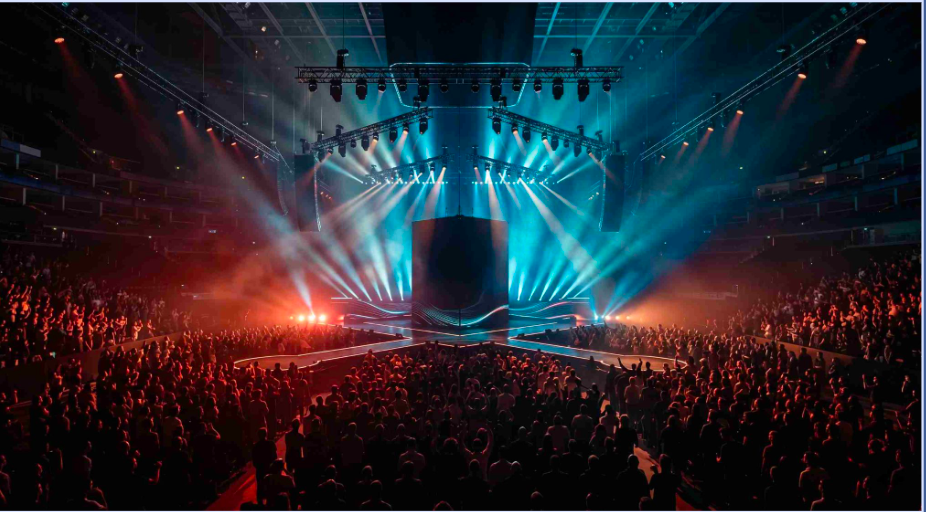
There’s a reason some events feel impossible to ignore before they even begin.
It’s not the speakers. Not the venue. Not even the topic.
It’s the build-up.
The steady stream of visuals, clips, and moments that keep showing up until the event starts feeling familiar, almost inevitable.
That kind of hype isn’t created in one campaign push. It’s engineered over time.
And increasingly, that process is being shaped by tools like seedance 2.0 much earlier in the content cycle, not at the end.
Hype Is Built in Layers, Not Announcements
Most event teams still think in milestones.
Announcement
Reminder
Final push
But audiences don’t experience content that way.
They experience it as fragments.
A short clip today. A visual tomorrow. A quick reminder two days later.
When those fragments connect, hype builds.
When they don’t, attention fades.
This is where execution speed becomes more important than planning.
The Real Problem: Gaps Between Content
The biggest issue in event marketing isn’t lack of ideas.
It’s the silence between them.
Each piece of content takes time. Design, edits, approvals. By the time it’s ready, the previous one has already lost traction.
Those gaps break momentum.
Instead of a continuous narrative, the campaign feels disconnected.
And disconnected campaigns don’t create anticipation.
Moving From Campaigns to Content Streams
Event marketing is shifting from campaigns to streams.
Instead of asking “What’s our next post?”, teams are starting to think:
“What can we release today that keeps this alive?”
That shift sounds simple, but it changes everything.
It requires content to be faster to produce, easier to adapt, and consistent across formats.
Where Seedance 2.0 Changes the Workflow
This is where the shift becomes practical.
With Seedance 2.0, content doesn’t need to go through a full production cycle every time. A simple idea, a speaker highlight, or even a theme can be turned into a structured visual sequence quickly.
This changes the role of the team.
Instead of managing production, they focus on direction.
Instead of waiting, they iterate.
Inside Higgsfield, this becomes a continuous loop where ideas can turn into content without slowing down the campaign.
One Idea, Multiple Moments
Most event campaigns start with one strong idea.
The challenge is stretching that idea across multiple touchpoints without repeating the same message.
With faster content generation, that becomes easier.
A single concept can evolve into:
- A teaser clip
- A speaker-focused visual
- A short narrative variation
- A countdown-style post
Each piece feels new, even though it comes from the same core idea.
Higgsfield helps maintain that consistency so everything still feels connected.
Timing Becomes a Creative Advantage
In event marketing, timing is creative.
Releasing the right content at the right moment often matters more than the content itself.
When production is slow, timing is compromised.
When production is fast, timing becomes flexible.
Teams can:
- React to trending topics
- Highlight speakers as conversations evolve
- Drop content during peak engagement windows
Seedance 2.0 enables this by reducing the delay between idea and output.
Smaller Signals Create Bigger Impact
Not every piece of content needs to be big.
In fact, smaller signals often perform better.
A quick visual. A short sequence. A simple idea expressed clearly.
These are easier to consume and more likely to be shared.
Seedance 2.0 makes it practical to create these smaller pieces without treating each one as a full project.
That increases frequency without increasing effort.
Visuals Build Anticipation Faster Than Text
People don’t wait to read.
They react to what they see.
Visual content creates anticipation because it shows, not tells.
It gives audiences a sense of what the event might feel like.
With Seedance 2.0, teams can maintain a steady flow of visuals instead of relying on occasional high-effort assets.
Higgsfield ensures that these visuals remain consistent across the campaign.
Experimentation Becomes Normal, Not Risky
Every audience responds differently.
Some engage with energy. Others with clarity. Others with storytelling.
The only way to know what works is to test.
Traditional workflows make testing expensive.
With Seedance 2.0, testing becomes part of the process.
Teams can explore different styles, tones, and formats without slowing down production.
This leads to campaigns that evolve based on real engagement.
Even Creative Industries Are Moving in This Direction
This shift toward faster, idea-driven creation is not limited to event marketing. It is also gaining momentum in filmmaking, where creators are experimenting with new ways to bring concepts to life.
A recent example highlights how a director used Seedance 2.0 to create an AI-driven short film featuring multiple versions of himself interacting on screen, exploring themes of authorship and identity. As covered in this Variety article on AI filmmaking, the real impact was not just the concept but the speed at which it was transformed into a compelling visual narrative.
That same speed and flexibility is exactly what event marketers are now leveraging to build and iterate on ideas much faster.
Why Higgsfield Makes This Work at Scale
Higgsfield is not built around isolated features.
It’s built around flow.
Event marketing needs repetition without fatigue, consistency without rigidity, and speed without chaos.
Seedance 2.0 fits into that by making content creation feel continuous.
Teams don’t stop to produce.
They keep moving.
And that’s what keeps the campaign alive.
Content Stops Feeling Scheduled
When everything is planned weeks in advance, content feels predictable.
When content is created closer to the moment, it feels alive.
This is one of the biggest shifts happening right now.
Campaigns are becoming less about schedules and more about presence.
Seedance 2.0 supports this by allowing teams to create in real time rather than waiting for predefined timelines.
Conclusion
Event hype is no longer created through isolated campaigns. It is built through continuous visibility, where each piece of content adds to a larger narrative that keeps the audience engaged. When there are gaps in that flow, attention drops, and the campaign loses its impact.
Seedance 2.0 changes this by making content creation faster and more flexible. It allows teams to generate visual content consistently without relying on slow production cycles, making it easier to maintain momentum throughout the pre-event phase.
Within Higgsfield, this becomes a system rather than a task. Teams can adapt, iterate, and scale their content while keeping everything connected, turning hype from a one-time effort into something that builds naturally over time.
