


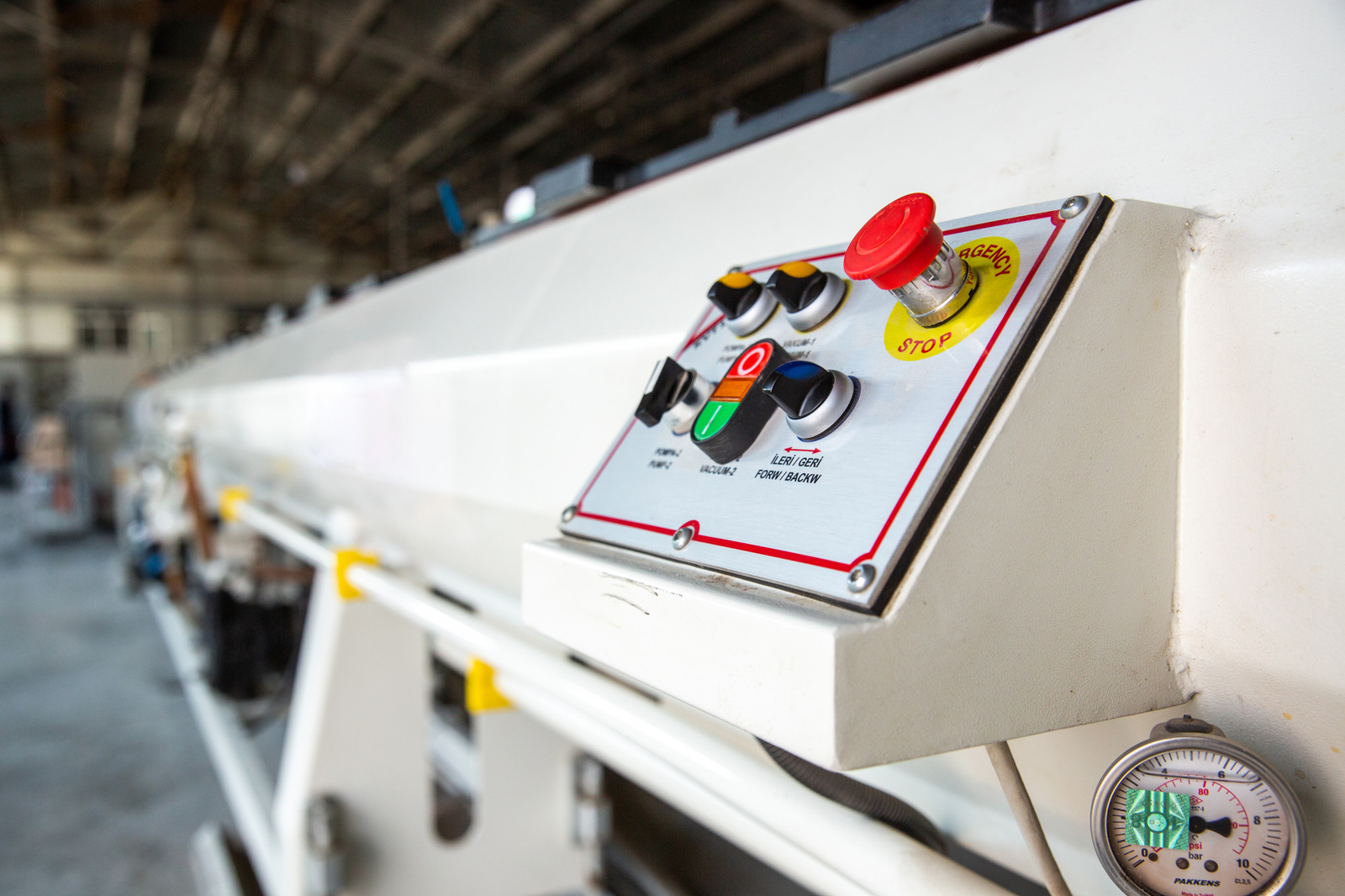
The manufacturing world is undergoing a massive paradigm shift. Industry 4.0 is no longer a futuristic buzzword; it is the current reality reshaping factory floors across the globe. As automation, data exchange, and artificial intelligence converge to create “smart factories,” traditional manufacturing processes must evolve or risk obsolescence.
Among these processes, industrial printing—often viewed as a mechanical, labor-intensive bottleneck—has undergone a digital and automated revolution. At the forefront of this transformation is the automatic screen printing machine. Once relying heavily on manual registration, squeegee pressure adjustment, and human oversight, modern screen printing has transformed into a highly precise, data-driven, and fully automated technology.
Today, it stands as a critical pillar in the architecture of the modern smart factory.
The Evolution of Screen Printing: From Manual to Smart Automation
Screen printing is one of the oldest replication methods, valued for its ability to deposit thick layers of ink, paste, or conductive material onto virtually any substrate—including textiles, plastics, glass, ceramics, and silicon wafers. However, the traditional manual or semi-automatic methods presented significant challenges for modern production lines:
- Inconsistency: Human operators inherently introduce variables in squeegee pressure, angle, and speed.
- Slow Changeovers: Swapping screens and recalibrating jobs manually creates extensive downtime.
- High Waste: Manual registration often leads to trial-and-error misprints, wasting expensive substrates and inks.
Automatic screen printing machines eliminate these liabilities. Built with advanced servomotors, optical registration systems, and programmable logic controllers (PLCs), these machines execute high-speed printing with micro-level repeatability. In a smart factory ecosystem, they transition from isolated hardware units into interconnected, intelligent nodes that communicate seamlessly with upstream and downstream equipment.
Core Technologies Driving Intelligence in Screen Printing
To understand why automatic screen printing machines are vital to smart factories, we must examine the advanced technologies embedded within them. These features elevate the equipment from mere mechanical automation to true “smart” machinery.
1. Vision Registration and Alignment Systems
In high-precision industries like electronics manufacturing (such as printed circuit boards or solar cells), a misalignment of a fraction of a millimeter results in total product failure. Modern automatic printers utilize high-resolution CCD cameras coupled with industrial vision algorithms.
These systems detect fiducial marks on the substrate and automatically adjust the screen or the print bed in real-time. This ensures perfect registration on every single cycle without human intervention.
2. Servo-Driven Precision
Traditional machines relied on pneumatic cylinders, which can suffer from pressure fluctuations. Smart automatic printers utilize multi-axis servo motors to control the squeegee motion, flood bar, and screen lift.
This provides absolute control over the speed and pressure dynamics, allowing manufacturers to optimize ink deposition for highly specialized materials.
3. IoT Connectivity and Data Harvesting
A factory cannot be “smart” without data. Advanced automatic screen printers are equipped with IoT (Internet of Things) sensors and communication protocols (such as OPC UA or Modbus).
They continuously collect performance metrics, including cycle times, squeegee pressure profiles, temperature, and error codes. This data is fed directly into Manufacturing Execution Systems (MES) or Enterprise Resource Planning (ERP) software for real-time monitoring.
Choosing the Right Partner for the Automation Journey
Transitioning to a smart factory model requires hardware that is reliable, scalable, and engineered with future-proof technology. Manufacturers looking to upgrade their production lines must partner with OEMs (Original Equipment Manufacturers) who specialize in industrial-grade automation.
For businesses aiming to scale their production capabilities, reduce labor dependencies, and integrate seamless printing workflows into their industrial ecosystems, investing in the right machinery is paramount.
To explore cutting-edge machinery designed specifically to bridge the gap between traditional printing and Industry 4.0 automation, you can know more about specialized industrial solutions that cater to high-precision manufacturing demands.
Predictive Maintenance and Reduced Downtime
In a traditional setup, a machine runs until it breaks, causing costly unscheduled downtime. In a smart factory, the sensors within an automatic screen printing machine monitor component wear.
For instance, if a servo motor begins drawing more current than normal to maintain squeegee speed, the system flags a warning. Maintenance teams can resolve the issue during scheduled intervals, maximizing Overall Equipment Effectiveness (OEE).
Agile Manufacturing and Rapid Job Changeovers
Smart factories thrive on high-mix, low-volume production. Consumers and B2B clients demand customization, which usually paralyzes traditional printing setups due to long configuration times. Automatic printers solve this via digital recipe management.
Operators can save specific parameters—speed, pressure, snap-off distance, and alignment data—for hundreds of different jobs. When a new batch arrives, the operator simply loads the recipe from a touchscreen panel, and the machine self-adjusts in seconds.
Enhanced Quality Control via Closed-Loop Systems
When integrated into a smart factory network, automatic screen printers can participate in closed-loop quality control. If a downstream automated optical inspection (AOI) system detects a slight drift or thinning in ink deposition, it sends a command back to the screen printer.
The printer automatically recalibrates its squeegee pressure or snap-off distance to correct the error on the fly, eliminating defects before a batch is ruined.
Diverse Industrial Applications
The application of smart automatic screen printing extends far beyond commercial graphics or t-shirt printing. It is an indispensable manufacturing method across several cutting-edge sectors:
| Industry | Application | Why Automation is Critical |
| Printed Electronics | Flexible circuits, biosensors, RFID tags, and membrane switches. | Requires microscopic precision and ultra-consistent conductive ink thickness. |
| Automotive | Defroster grids on windshields, dashboard displays, and touch panels. | Must meet stringent automotive safety and durability standards with zero defects. |
| Solar Energy | Depositing silver paste grid lines onto photovoltaic silicon wafers. | Ultra-high throughput required; manual handling would fracture fragile wafers. |
| Medical Devices | Test strips (like glucose monitors) and wearable health sensors. | Demand for absolute biocompatibility, hygiene, and strict regulatory compliance. |
Environmental Sustainability and Resource Efficiency
Sustainability is a core objective of the modern smart factory. Automated screen printing contributes significantly to green manufacturing initiatives. Because these machines optimize material usage through precise mechanical control, they drastically reduce the wastage of expensive inks, solvents, and substrates.
Furthermore, automated systems are designed to pair efficiently with modern, energy-efficient curing tunnels (such as UV LED curing systems). The machine coordinates its cycle speeds with the dryer, ensuring that heating elements are only drawing peak power when a substrate is actively passing through. This tight integration minimizes the carbon footprint of high-volume production facilities.
Frequently Asked Questions (FAQs)
What makes a screen printing machine “smart” compared to a traditional one?
A traditional screen printing machine relies on manual adjustments, physical knobs, and human oversight for registration and ink consistency. A “smart” automatic screen printing machine utilizes advanced industrial technologies such as CCD vision registration cameras, multi-axis servo motors, and IoT connectivity protocols. These features allow the machine to self-calibrate, track production data in real-time, and communicate directly with a factory’s centralized Manufacturing Execution System (MES).
Can automatic screen printing machines handle fragile materials?
Yes. In fact, automation is highly preferred for fragile substrates like silicon wafers used in solar cells or ultra-thin glass for electronics. Because these machines use high-precision servo motors rather than unpredictable pneumatic pressure, the squeegee pressure and screen lift (snap-off distance) are controlled down to the micrometer, drastically reducing material breakage.
How do automated printers improve production changeover times?
In traditional setups, changing jobs requires manually swapping screens, adjusting alignment by eye, and running several test prints, which can take hours. Automatic printers utilize digital recipe management. Operators can save exact printing parameters for hundreds of different jobs on a touchscreen interface. When a new job is selected, the machine automatically retrieves the saved data and configures itself in seconds.
How does Industry 4.0 connectivity assist with machine maintenance?
Through IoT sensors, automatic screen printing machines continuously monitor their own health metrics—such as motor current, temperature, and cycle speeds. If a component begins operating outside its optimal threshold, the machine flags a warning for predictive maintenance. This allows technical teams to fix minor issues before they cause a catastrophic, unscheduled breakdown on the production line.
Are automatic screen printing machines environmentally friendly?
Yes, they contribute significantly to sustainable manufacturing. By eliminating human error in alignment and pressure control, they drastically reduce substrate and expensive ink waste. Additionally, modern automatic lines are engineered to sync perfectly with energy-efficient curing tunnels (like UV LED dryers), ensuring that power is consumed efficiently only when materials are actively being processed.
Conclusion
The smart factory is not a distant goal—it is the baseline for competitive manufacturing today. As industries demand higher precision, faster turnaround times, and complete data transparency, manual and fragmented processes cannot keep pace.
The automatic screen printing machine has proven itself to be far more than a mechanical upgrade; it is an intelligent, adaptable, and highly efficient solution that fits perfectly into the interconnected web of Industry 4.0. By adopting this technology, manufacturers safeguard their production lines against labor shortages, reduce material waste, and achieve the ultimate manufacturing goal: flawless quality at maximum velocity.
