


Undoubtedly speaking, the construction sector has changed a lot over the past two decades. This typically means that the construction materials being used have improved in quality. Not only that, but the sector operates on tighter timelines with more pressure to deliver premium quality at all levels.
Similarly, concrete panels sit right at the centre of that shift. They’ve officially gone from being a specialist choice to a mainstream one. So if you haven’t worked with them yet, you should learn a little about them so you’d know their proper and effective use in your projects.
What Are Concrete Panels?
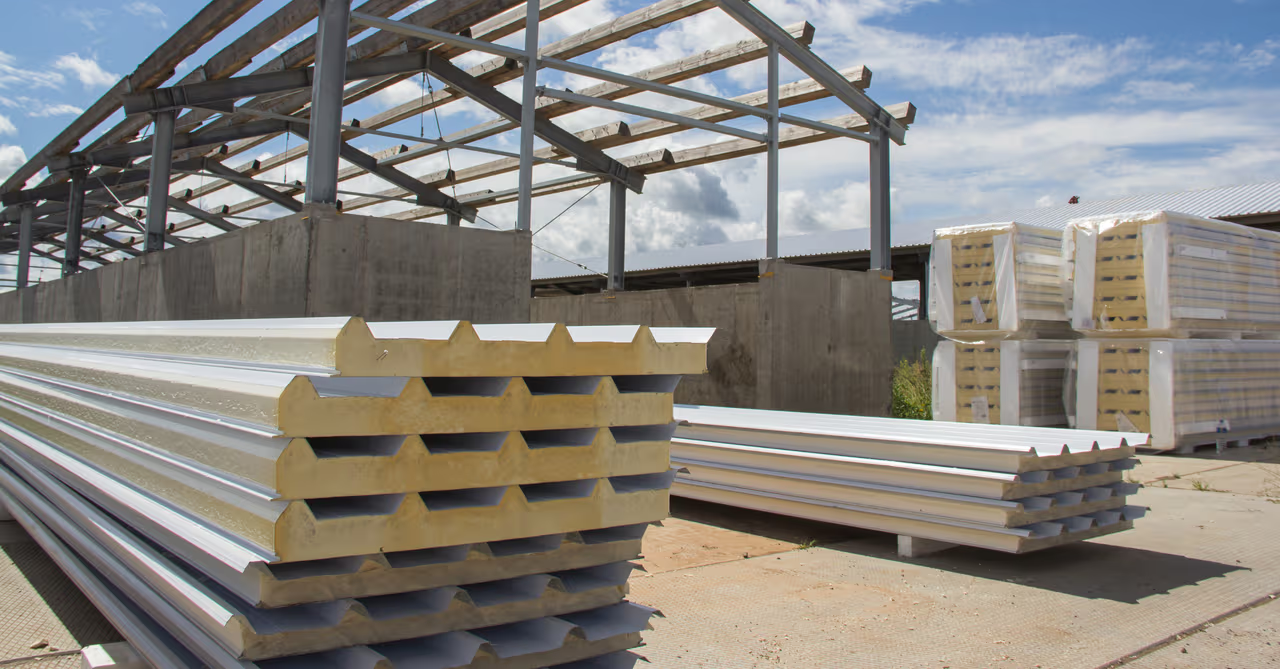
To put simply, concrete panels are pre-cast slabs mass produced in factories and delivered to site in a ready to install condition. The manufacturing process is simple. The concrete is poured, mixed, and cured consistently every time so the quality remains consistent. When these panels arrive at their destination, installation begins straight away. Not a single delay can be bound to happen once the concrete panels get delivered.
Moreover, the concrete wall panels are used mostly across commercial, residential, and industrial projects. Typically, they work best for boundary walls, structural walks, facades, and partitions depending on the type of panel you select.
The Different Types Available
Solid panels are the most basic option out there. They are dense and robust, making them compatible with load-bearing walls and applications where maximum resilience is the priority. Hollow-core panels have internal channels running through them that reduce weight and improve thermal performance without sacrificing structural integrity.
Another popular choice is the sandwich panel. This panel consists of two concrete layers with an insulation core in between. This makes it principally effective in climates where temp management is extremely important.
Then there are wall panels lightweight in design, which use aerated or composite concrete mixes to bring the overall weight down significantly. These are increasingly common on projects where transport logistics, crane capacity, or foundation load are limiting factors. Wall panels lightweight enough to be handled with smaller equipment can open up sites that heavier panels simply could not work on.
The Practical Advantages on Site
The most immediate benefit is speed. Walls that would take days to form, pour, and cure traditionally can be installed in hours with pre-cast concrete panels. On large projects that time saving compounds across every wall on the build, and it adds up to a very real reduction in your overall timeline.
Quality consistency is the other major practical advantage. On-site pours are subject to small variables that affect the finished result. Crew changes, slight differences in mixing, temperature fluctuations during curing. Factory production removes most of those variables. Every concrete wall panel meets the same specification, which means fewer defects to fix and less material wasted across the project.
Long-term durability is strong too. Concrete panels hold up well against heat, fire, moisture, and general wear. They do not rot, they are not affected by pests, and they require very little maintenance once installed. For building owners thinking about the lifetime cost of their asset rather than just the build cost, that is a genuinely important consideration.
Things to Plan for in Advance
Plan in advance and see the magic happen in your manufacturing process. Since panels are manufactured to your specifications, you need accurate measurements and a finalised design before production even begins. Consequently, changes made after manufacturing starts are costly and can easily slow things down. Getting this stage right is not complicated, but it does require more detail than a traditional on-site approach.
Site access is also worth thinking about early. Delivering large panels to sites with restricted entry or tight spaces needs some logistics planning. Choosing wall panels lightweight in design can help here because smaller delivery vehicles and lighter lifting equipment become viable options, which makes access on difficult sites a lot more workable.
Is It the Right Choice for Your Next Project?
Concrete panels are worth some serious consideration for almost every other construction project today. With the right combo of consistency, speed, durability, and timely maintenance, they’re the best option across a wide range of building types and sizes. Also, the majority of commercial, residential, and industrial sectors need the help of the concrete panels.
In the end, it’s always best to know your options from the start so you can decide better. Also, the earlier you bring concrete panels into the picture, the more value they’ll deliver for your next project.
