


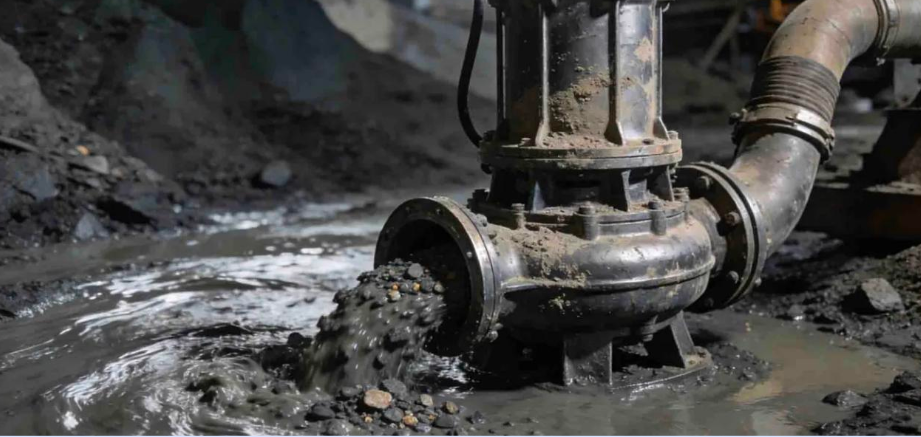
Every worksite has that one stubborn problem. For many in mining, wastewater, and construction, that problem is sludge. It sits at the bottom of sumps, pits, and tanks. It is thick, heavy, and hard to move. You cannot use a standard water pump. It will clog or burn out in minutes.
Enter the submersible sludge pump. This machine is built for the ugly stuff. It handles high solids, abrasive particles, and viscous muck that would stop other pumps cold. If you are dealing with slurry, sediment, or sewage sludge, this is likely the tool you need.
We have spent years helping operations choose the right pump. We have seen what works and what fails. This guide covers everything you need to know — go here to dive into full details on how it works, where to use it, and how to keep it running.
What Exactly Is a Submersible Sludge Pump?
Let’s clear up the terminology first. A submersible sludge pump is a type of centrifugal pump. It is designed to operate while fully submerged in the fluid it is pumping. Unlike a vertical slurry pump that sits on the surface with a long shaft, this unit goes directly into the pit.
The “sludge” part is key. These pumps are not for clean water. They are engineered for liquids loaded with solids. Think of mining tailings, raw sewage, dredged sand, and industrial waste. They feature wider impeller channels to pass solids without clogging.
Since the pump is underwater, it uses the fluid’s pressure to push into the pump. This means it needs no priming. It is ready to work as soon as it hits the liquid.
Key Components and Functions
To fully understand how a submersible sludge pump works, it is necessary to learn its core parts. Every component serves a specific purpose and ensures stable, long-lasting performance in harsh working environments.
- Motor
It is normally an electric motor designed for submerged operation. The motor is fully enclosed within an oil-filled cavity or sealed with resin. This tight structure effectively stops water from entering internal electrical parts.
- Impeller
As the rotating core of the pump, the impeller drives sludge movement. Most sludge pumps adopt semi-open or vortex impeller structures. Such designs allow solid particles to pass smoothly and avoid blockage.
- Casing (Volute)
This outer shell guides the flow direction of sludge. It is built with heavy-duty cast iron or high-chromium steel to withstand long-term abrasive wear.
- Mechanical Seals
These parts play a vital role in pump operation. They block sludge from seeping into the motor chamber. Most industrial heavy-duty pumps adopt double mechanical seals with tungsten carbide contact surfaces for reliable sealing.
- Agitator (Optional yet Widely Used)
It is a small propeller installed near the pump inlet. When rotating, it stirs up settled sediment and turns thick sludge into a fluid mixture that the pump can easily convey. It greatly improves the pumping effect for dense solid deposits.
- Discharge Flange
It acts as the discharge port for connecting pipelines or hoses. In most pump models, the flange is placed at the top of the whole unit.
A Brief History
The idea of submersible pumps is not new, and the sludge-specific type was developed to meet real industrial needs. In the early 1900s, mining sites mainly used outdated steam pumps or surface pumps fitted with long suction pipes. These devices worked poorly and often suffered from cavitation problems.
As electric motors became more reliable and sealing technology improved in the 1950s and 60s, the first submersible wastewater pumps appeared. Contractors realized they could lower a pump directly into a construction site pit. Over the decades, metallurgy improved. We moved from simple cast iron to high-chrome alloys and specialized rubbers. This allowed pumps to handle highly abrasive mining slurry, birthing the modern submersible sludge pump.
Types of Submersible Sludge Pumps
Sludge comes in different textures and compositions, so pump makers design various models to fit different working conditions.
Electric Submersible Sludge Pumps
This is the most widely used type. It runs on an electric motor and suits fixed installation sites with stable power supply. It operates with low noise and high energy efficiency.
Hydraulic Submersible Sludge Pumps
This type has no built-in electric motor. It is powered by an external hydraulic system. It fits flammable and dangerous areas with explosion-proof requirements, as well as remote locations without electricity. It also performs better under high-torque working loads.
Heavy Duty (Mining) Models
These are built like tanks. They feature hard metal liners and high-chrome impellers. They are designed for continuous operation in highly abrasive gold, copper, or diamond mines.
Non-Clog (Sewage) Models
These feature vortex impellers. The impeller is recessed, meaning the solid matter flows through a swirling chamber rather than directly through the impeller vanes. Great for municipal waste.
How Does It Work?
The working principle is centrifugal force, but with a twist for sludge.
- Submersion
You lower the pump into the sludge pit. It rests on the bottom (or a stand).
- Agitation
If equipped, the agitator spins. It stirs the settled solids at the bottom, mixing them with water to create a slurry.
- Suction
As the electric motor spins the impeller, it creates a low-pressure area at the inlet.
- Thrust
The rotating impeller throws the sludge outward. This converts rotational energy into kinetic energy (velocity).
- Discharge
The velocity pushes the sludge up through the discharge pipe and out of the pit.
Because the pump is submerged, there is no suction lift issue. It does not need to “suck” water up. The water pushes itself into the pump. This makes it efficient.
The Advantages
What makes a submersible sludge pump better than horizontal or vertical pump types? Below are its key strengths:
- Space Saving
Since the pump is placed underwater, no extra ground area is needed for a pump room or fixed base. It is an ideal choice for work sites with limited space.
- No Priming Needed
There is no risk of losing suction prime. The pump can run steadily as long as it stays submerged in liquid.
- Low Noise Operation
Water acts as a natural sound barrier. The pump runs quietly underwater and effectively cuts down noise pollution on site.
- Natural Motor Cooling
The surrounding liquid cools the motor automatically. This avoids overheating, even during long hours of continuous operation.
- Strong Solids Handling
Equipped with a professional impeller, the pump can smoothly pass stones, fiber waste and other debris that may cause damage to ordinary pumps.
- Easy Portability
Most models are fitted with a guide rail structure or lifting chain. Users can move the pump conveniently from one sludge pit to another.
Usage and Operation Tips
Owning the pump is one thing. Using it correctly is another. Follow these tips for better performance.
- Use a Guide Rail System: Don’t just drop the pump on a rope. Install a guide rail. This allows you to slide the pump down into place and lift it out for service without entering the hazardous confined space of the pit.
- Mind the Cable: The power cable is the pump’s lifeline. Protect it from abrasion. Use a strain relief clamp so the weight of the cable doesn’t pull on the pump’s electrical terminals.
- Don’t Run Dry: Most submersible pumps are water-cooled. If the pit runs dry and the pump keeps running, the motor can overheat. Use a float switch or level sensor to turn the pump off when water levels drop.
- Check the Voltage: Voltage drop is common in long cables on remote sites. Ensure the voltage at the pump terminals is within the motor’s rated range.
Applications
Where do you actually see these pumps working? Everywhere.
- Mining and Quarrying: Dewatering mine shafts, pumping out settling ponds, and moving tailings. The agitator is vital here to stir up compacted ore.
- Municipal Wastewater: Sewage treatment plants use them to move raw sludge between tanks. Non-clog versions handle wet wipes and organic waste.
- Construction Sites: Basement flooding and foundation pit dewatering. They keep the site dry so work can continue.
- Dredging: Lakes, rivers, and ports. They remove sediment to keep waterways navigable.
- Agriculture: Manure pits and irrigation canals. They handle thick, viscous organic waste.
- Industrial Plants: Moving waste products, lime slurries, or coal ash.
Maintenance Tips
A submersible sludge pump is tough, but it is not invincible. Regular checks keep it alive.
- Grease the Seals: Many pumps have an oil chamber with a sight glass. Check the oil monthly. If the oil looks milky (like a latte), water is getting past the mechanical seal. Change the seal immediately.
- Inspect the Impeller: Lift the pump and check if stones or debris are jammed between the impeller and the volute. Even a small pebble can unbalance the shaft.
- Check the Agitator: Ensure it is not worn down. A worn agitator won’t stir the sludge effectively, causing the pump to cavitate or run dry.
- Cable Inspection: Look for cuts, nicks, or exposed wires in the power cable. This is a common failure point.
- Bearings: Listen to the pump. If it sounds like a coffee grinder, the bearings are failing. Replace them before the shaft snaps.
Future Outlook
The world of submersible sludge pumps is changing. We are seeing a shift toward smarter, greener machines.
- IoT and Sensors: New pumps come with built-in vibration and temperature sensors. They send data to your phone. You will know a bearing is failing weeks before it stops the pump.
- Energy Efficiency: Variable Frequency Drives (VFDs) are becoming standard. They allow the pump to speed up or slow down based on the sludge level, saving massive amounts of electricity.
- Better Materials: 3D printing and advanced metallurgy are creating composites that are lighter and harder than steel. We expect pumps to become lighter and last longer.
- Explosion Proofing: As safety regulations tighten, more hydraulic and intrinsically safe electric models are entering the market for volatile environments.
Conclusion
Choosing the right submersible sludge pump is about matching the tool to the mud. If you have a deep pit with high solids, this is likely your best bet. It saves space, requires no priming, and handles the abuse that clean-water pumps cannot.
Look at your site conditions. Check the pH, the solids size, and the required flow rate. Do not choose a pump based only on the initial price. Instead, focus on its overall long-term operating cost. Click here to browse our full submersible sludge pump lineup and check detailed long-term operating cost data for each model.
References
1.New sludge removal system for pulp and paper clarifiers
Abstract: This paper introduces an innovative sludge removal system for pulp and paper industry clarifiers, which replaces traditional rake mechanisms with submersible sludge pumps. It elaborates the programmable controller-guided positioning strategy for pumps to target high-concentration sludge areas, and verifies that the system reduces construction cost by 35% and maintenance cost by 42% compared with conventional schemes, with stable non-clogging performance in fibrous sludge scenarios.-Read more
2.TATUS OF MECHANICAL SLUDGE REMOVAL AND COOLING COIL CLOSURE AT THE SAVANNAH RIVER SITE
Abstract: This engineering paper introduces the application of submersible sludge pump systems in the nuclear waste tank sludge removal project of Savannah River Site. It verifies that submersible pumps can achieve 90% sludge removal efficiency in 2800-cubic-meter large storage tanks, and summarizes the operation strategy and maintenance experience of pumps in high-risk abrasive sludge scenarios, with strong industrial reference value.-Read more
