


If you survey 100 companies, none of them – not one – will tell you they’ve fully documented all their business processes. And even if they had, the hard-earned knowledge at the front lines isn’t part of it. If some revenue manager in Des Moines has figured out a neat trick to maximize return on customer acquisition costs, odds are it hasn’t made its way into the corporate wiki. And that’s just part of the problem. Coordinating how different teams work is even harder to document – including what data they shouldn’t be sharing with a public AI chatbot. A sandbox can help bring a bunch of that to the surface without first triggering a crisis.
What a sandbox is actually for
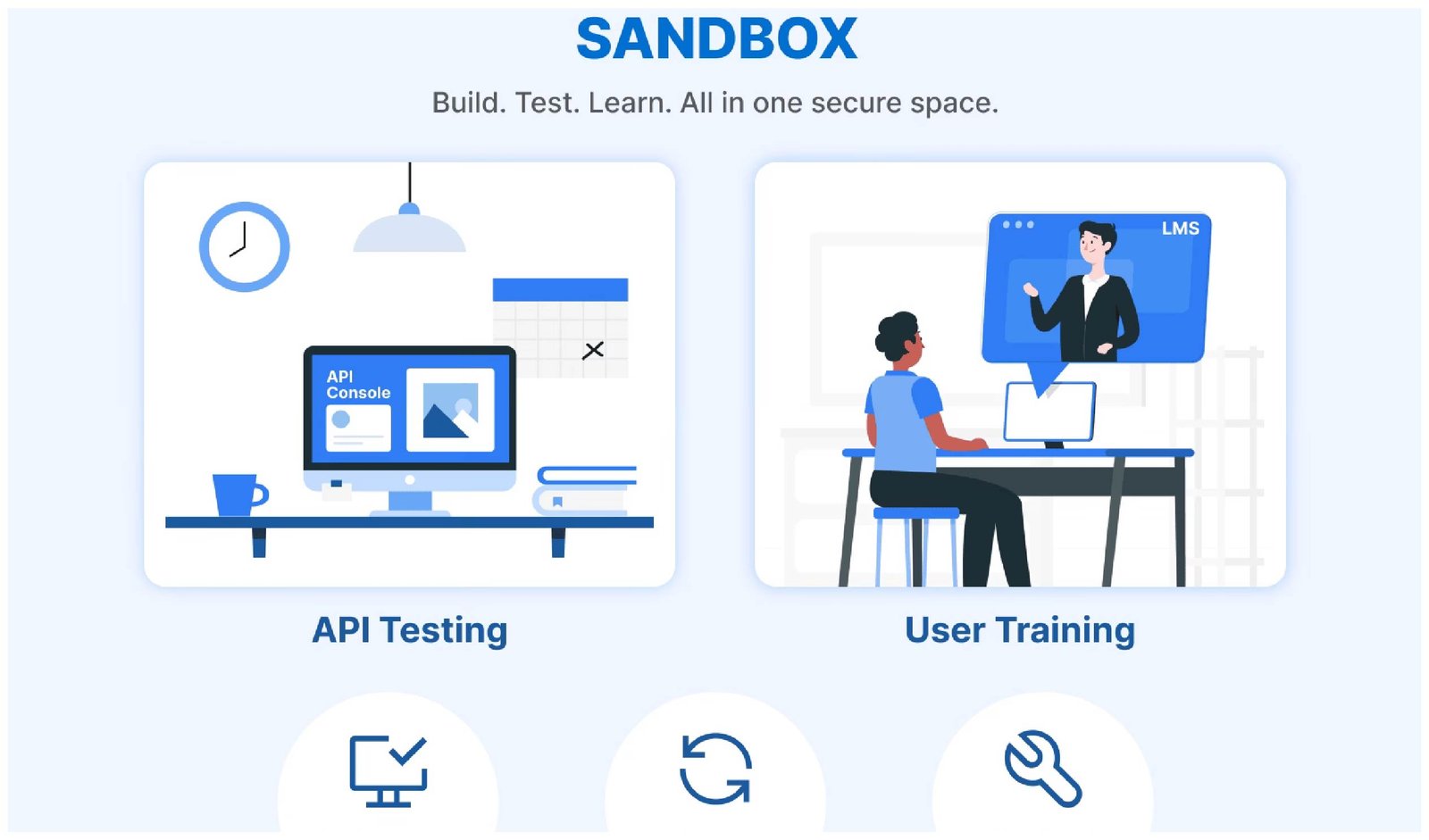
A sandbox environment provides a secure and isolated testing space for users to interact with an AI tool using real data and questions. It is completely cut off from any production systems, customer data, or anything else that could pose a risk if a breach were to occur. Nothing in the sandbox should be able to leave it, and no unauthorized data should be able to enter.
The purpose is not to create a bottleneck, but to ensure that people have a safe environment to experiment in where they can’t make the two mistakes that everyone fears: either leaking information or receiving incorrect information with too much confidence. It is estimated that by 2027, 40% of all AI incidents will result from “shadow AI,” where employees use unauthorized programs because no sanctioned alternative is available. This is the sanctioned alternative.
Building it forces a data inventory you’ve probably been avoiding
This aspect is often underestimated by teams. Before you can even build the sandbox, you have to make the call as to what you can shovel into it, and merely making that call exposes problems.
You have to think of your data in terms of three buckets – a lot of public-facing stuff, some internal but relatively low-risk information, and a small, dense core of restricted data for which you have specific compliance regimes such as GDPR, SOC 2, or HIPAA. But making that visible and explicit also means that someone has to go take an inventory of what data governance actually looks like within your organization today, and often the answer for a lot of companies is “not much.” Policies are scattered across ancient wikis, people have inherited permissions from three reorgs ago, and nobody is entirely sure who owns what.
But that’s not a side effect of deploying your sandbox. That is your sandbox, already in operation.
Turning gaps into a roadmap
Once you’ve got them sorted, those gaps map directly onto two workstreams: fixing your knowledge management and shaping your AI rollout. Missing documentation goes on the writing backlog. Outdated processes go to whoever owns that workflow for a rewrite. Tribal knowledge gets flagged for interviews and written down before it’s lost for good.
This is usually the point where internal teams hit a ceiling. They know something’s broken, but they don’t have a structured way to prioritize the fixes or connect them to a wider AI strategy. That’s normally where it makes sense to bring in outside genai consulting – not to run the sandbox for you, but to help translate what it exposed into a governance framework and adoption plan that actually holds up past the pilot phase.
The technical setup, step by step
Once you’ve got your data tiers in the right order, actually constructing the layer is a pretty simple process:
Pick a model and scope its access. This seems obvious enough, but you can only connect it to your cleared internal knowledge sources – your enterprise knowledge base, approved wikis, your product docs. During early testing, and particularly if you’re assessing something other than broad internet access, you probably don’t want it to have open internet access either.
Enforce role-based access control. You shouldn’t assume that a product manager querying customer case records isn’t a security problem. Not every employee is allowed access to all of your data, even though this layer can. How you implement that varies by size of org, of course.
Log everything. The prompts, the responses, who was making the requests, and when – you’ll need it later to train your final evaluation dataset, and it will help identify when the model is just outright hallucinating in the most overconfident manner.
Add guardrails against prompt injection and data exfiltration. Can someone maxing out your cloud bill send the model a prompt that overrides its safeguards in specific circumstances? Can a competitor or state actor exfiltrate your data by sending a prompt and using the answer? Many teams choose to bring in red teaming to specifically look for this before they start expanding use.
The real value shows up in what the AI can’t answer
Once your team actually begins using the sandbox, and asks it real work questions, not test prompts, the logs cease to be a security record and instead become a fairly pristine list of every question the AI can’t already answer from your approved knowledge base. Not a bug. A gap in what your organization has written down anywhere.
Those logs tend to reveal that in an average organization, roughly 30% of the questions fall into the first category – questions for which the relevant documentation simply does not exist. A healthy 60% or so of the questions will probably come from the second category – questions for which the relevant institutional knowledge is available, but only in people’s heads. Processes were documented. Back in the day. A trivial percentage of the remaining 10-15% may come from processes for which the answer has, in fact, been lost and need to be rediscovered and updated.
The sandbox tells you what your company knows
Execute the sandbox properly, and it will no longer be an environment where you go to test, but a reflection of your organization. The queries that employees pose, and those that AI is unable to respond to, reveal the actual, day-to-day institutional knowledge you depend on – not the one documented in your organization’s manual. This is priceless and far more valuable than the security checkbox most assume teams are implementing this for.
